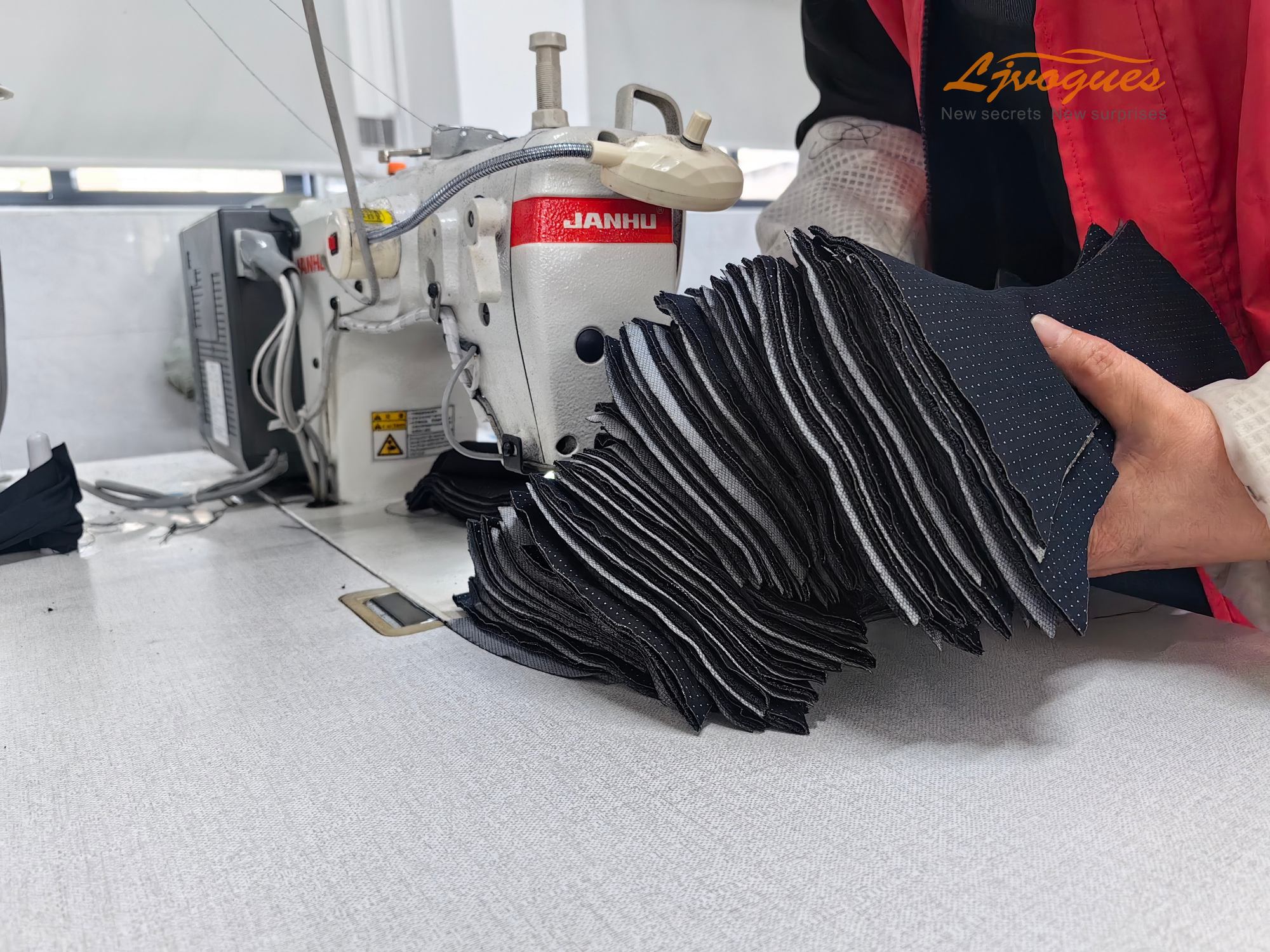
A good private label period underwear program should be judged by measurable performance, not by layer count or a supplier’s stated absorbency alone. Check intake speed, retained capacity under pressure, leakage at the gusset edges, dimensional change after washing, elastic recovery, waterproof resistance, colorfastness, and chemical compliance. AATCC’s 2026 textile testing program includes separate methods for absorbency, liquid moisture management, wicking, drying, water resistance, laundering, and color evaluation. A practical approval plan should compare at least 3–5 pieces per size, test new and washed garments, and set numerical tolerances before production rather than judging one development sample by appearance.
Period underwear works as a textile system. Menstrual fluid first touches the skin-facing layer, moves into an absorbent layer, spreads through that material, and is then blocked from reaching outer clothing by a resistant backing. The FDA describes period underwear as an external product that absorbs menstrual flow rather than collecting it internally, so performance depends heavily on how those layers behave together.
A supplier may advertise 20 mL, 30 mL, or 40 mL capacity, but capacity measured at full saturation says little about the first few minutes of wear. A sample that eventually holds 30 mL can still leak if fluid remains on the surface too long or travels sideways faster than the absorbent layer can take it in.
Compare intake time at several fluid additions rather than testing one large pour. Record the time for the first dose, a later dose, and the point where surface wetness becomes noticeable.
AATCC TM195 was designed to measure and classify liquid moisture management in knitted, woven, and nonwoven fabrics. It considers water resistance, absorption, fabric structure, and wicking behavior, so it gives buyers a better framework than a single capacity number. The method was already in use in 2017 and remained part of AATCC’s 2026 moisture-management testing program.
Capacity should then be paired with retention testing. Apply controlled pressure after absorption and measure how much liquid returns to the surface or transfers through the construction. A product that retains 90% of absorbed liquid under a chosen internal test condition will normally feel different from one retaining 70%, even when both initially absorb the same volume; those percentages should be treated as brand test criteria, not universal industry pass limits.
Coverage matters just as much as retention. Measure the absorbent panel from front to back, record its narrowest crotch width, and compare those dimensions across sizes. A 7 cm-wide gusset may sit correctly on one body shape while moving or folding on another, so the same panel dimensions should not automatically be used from XS through 3XL.
When checking coverage, pour fluid near the front, center, rear, and close to both gusset edges. Edge performance often exposes construction problems that a center-only test misses, especially where absorbent layers are stitched into stretch fabrics.
-
Test at least 3 locations across the gusset.
-
Repeat each location on 3 garments from the same development round.
-
Record time to absorption, visible spread, underside transfer, and edge leakage.
-
Repeat after laundering rather than using only unused samples.
That creates a minimum of 9 location observations per condition before wash comparisons are added. It is still a small product-development sample, but it reveals more variation than approving one garment after one center-pour test.
The waterproof layer should be examined separately because leakage through the backing and leakage around the backing are different failures. AATCC TM127 measures water resistance under hydrostatic pressure and remains included in AATCC’s 2026 resistance and repellency testing program, making it a useful reference when a brand wants repeatable membrane comparisons.
A membrane can resist liquid and still make the garment unpleasant to wear if it is stiff, noisy, or slow to release moisture vapor. For that reason, compare membrane performance with fabric hand, thickness, and water-vapor behavior instead of selecting the highest resistance result without considering comfort.
The body fabric then needs a separate review. Record fiber content, fabric weight, stretch in both directions, recovery after extension, surface feel, pilling behavior, and dimensional change. A composition such as 92% nylon and 8% elastane can perform very differently from another fabric with the same percentages because yarn construction, knitting density, finishing, and fabric weight also change the result.
Recovery deserves more attention than maximum stretch. Stretch a marked section to a fixed extension, release it, and measure how closely it returns to the original length after a defined rest period. A fabric that reaches 150% of its starting length but stays permanently enlarged can loosen around the legs and allow the gusset to move away from the body.
A useful internal specification records both extension and recovery. “High stretch” is not a measurable production requirement.
Laundry testing should begin before bulk approval because period underwear is intended for repeated use. AATCC TM135-2025 evaluates fabric dimensional change after home laundering using 4 washing temperatures, 3 agitation cycles, and 4 drying procedures; TM150-2025 applies dimensional-change testing to garments under similar home-laundering conditions.
Brands can compare measurements before washing and after 5, 10, 20, or another defined number of cycles that matches their product-development plan. Waist width, front rise, back rise, leg opening, gusset length, and gusset width should all be recorded, because two materials in one garment may shrink at different rates.
A 3% body-fabric change and a 7% gusset-layer change, for example, could create puckering even when every material still appears usable by itself. Those figures are an illustration of why components should be tested as a finished garment, not suggested universal acceptance limits.
Standardized laundering also reduces supplier-to-supplier variation. AATCC notes that laboratory laundering uses controlled detergents, machines, ballast, and procedures to improve comparison, while household practices vary. The organization’s LP1 procedure covers machine washing and LP2 covers hand washing.
After laundering, repeat the same liquid tests used on the unused garment. Measure absorption time, retained capacity, visible leakage, rewet, drying behavior, elastic condition, seam appearance, and dimensions. If absorbency was measured only before washing, the quality review covers the least demanding stage of the product’s life.
Construction inspection can be handled with a simple production sheet rather than subjective comments such as “stitching looks good.” Record stitch consistency, skipped stitches, seam puckering, broken threads, elastic attachment, gusset symmetry, label position, and whether the membrane has been punctured or distorted near seam lines.
For one size, inspect 5 garments side by side and measure the same points on all 5. If gusset length is specified as 30.0 cm with an internal tolerance of ±0.5 cm, every supplier should work from the same written range; the tolerance must come from the brand’s fit and manufacturing requirements rather than being assumed to be an industry standard.
Abrasion also deserves attention for products expected to be washed and worn repeatedly. ASTM D4966-22(2026) covers Martindale abrasion testing for knitted, woven, and nonwoven fabrics, although ASTM notes that results can vary between laboratories and that the method is not recommended by ASTM as a stand-alone acceptance test for commercial shipments.
That limitation matters. A single abrasion number should support, not replace, garment inspection and wash testing. The same principle applies to fabric softness, pilling, and stretch: laboratory results are easier to interpret when the buyer already knows how the finished underwear changes during use.
Color performance should also be written into the specification. AATCC’s testing system includes methods for colorfastness to laundering, water, perspiration, and rubbing, and its 2023 proficiency program listed TM8 for crocking, TM15 for perspiration, TM61 for accelerated laundering, and TM107 for water.
Dark fabrics deserve particular attention because rubbing or washing can transfer dye to lighter trims, labels, other garments, or skin-contact materials. Check both dry and wet conditions where relevant, and compare results before approving dark navy, black, burgundy, or other heavily dyed production colors.
Chemical documentation should be reviewed with the same care as physical performance. Ask the supplier to identify every major fabric, laminate, elastic, print, treatment, and lining, then match test reports to the actual materials used in the approved style.
A report dated 2024 for an earlier fabric lot does not automatically describe a different 2026 material. Check the laboratory name, test date, material description, report number, applicable requirements, and whether the tested article matches current production.
Odor-control or antibacterial claims need separate support. AATCC’s 2026 program lists TM100 and TM147 for antibacterial properties, showing that antibacterial assessment is a separate field of textile testing rather than something established by an absorbency result.
If a supplier says a finish remains effective after 50 washes, ask for a report showing how that claim was measured after the stated laundering sequence. Avoid carrying a treatment claim into packaging or product pages when documentation covers only an unused textile.
Fit testing should cover several sizes because fit affects fluid control. A garment may pass every flat-table test but perform poorly if the gusset shifts during walking, the leg opening gaps while sitting, or the rear panel does not stay in place during sleep.
For an initial fit round, using at least 3 wearers across 3 representative sizes gives 9 wearer-size observations before revisions. A broader size range needs broader testing, especially when a brand offers XXS–4XL rather than a narrow three-size range.
| Area | What to record | Example development check |
|---|---|---|
| Absorption | intake time, volume, spread | 3 fluid locations × 3 garments |
| Retention | liquid released under pressure | before and after washing |
| Leakage | underside and edge transfer | front, center, rear |
| Fit | gusset position, leg gap, movement | 3 wearers × 3 sizes |
| Laundry | dimensions and performance | 0, 5, 10, 20 cycles |
| Construction | seams, elastic, symmetry | 5 garments per checked size |
| Color | rubbing, wash, water, perspiration | each approved color |
| Documentation | material and report match | current production version |
Supplier comparison should use the same protocol for every factory. Sending Supplier A a 20 mL test while Supplier B is judged at 30 mL makes quotation and performance comparisons difficult to interpret, even when both products are described as “heavy-flow” underwear.
Price comparisons need the same discipline. If one quotation uses a heavier absorbent package, another uses a thinner membrane, and a third removes post-wash testing, the three unit prices describe different products.
Before mass production, freeze the approved bill of materials, measurement chart, gusset dimensions, seam construction, color references, packaging requirements, test methods, and numerical tolerances in one controlled specification. Keep an approved garment as the physical reference and require any material substitution to be reviewed before shipment.
The 2025 and 2026 versions of AATCC methods show why specifications should name the test method and version where applicable rather than writing only “wash test passed” or “waterproof test passed.” A result has more use when the buyer can see what was tested, under which method, on how many pieces, and after how many wash cycles.